A Bridal Hair Trial With a Veil: What to Test and Record
A veil changes the hairstyle plan because it adds an attachment point, weight and a later removal task. Bring the actual veil where possible and test it with the planned outfit neckline. A trial is useful when it records practical decisions as well as an attractive front photograph.
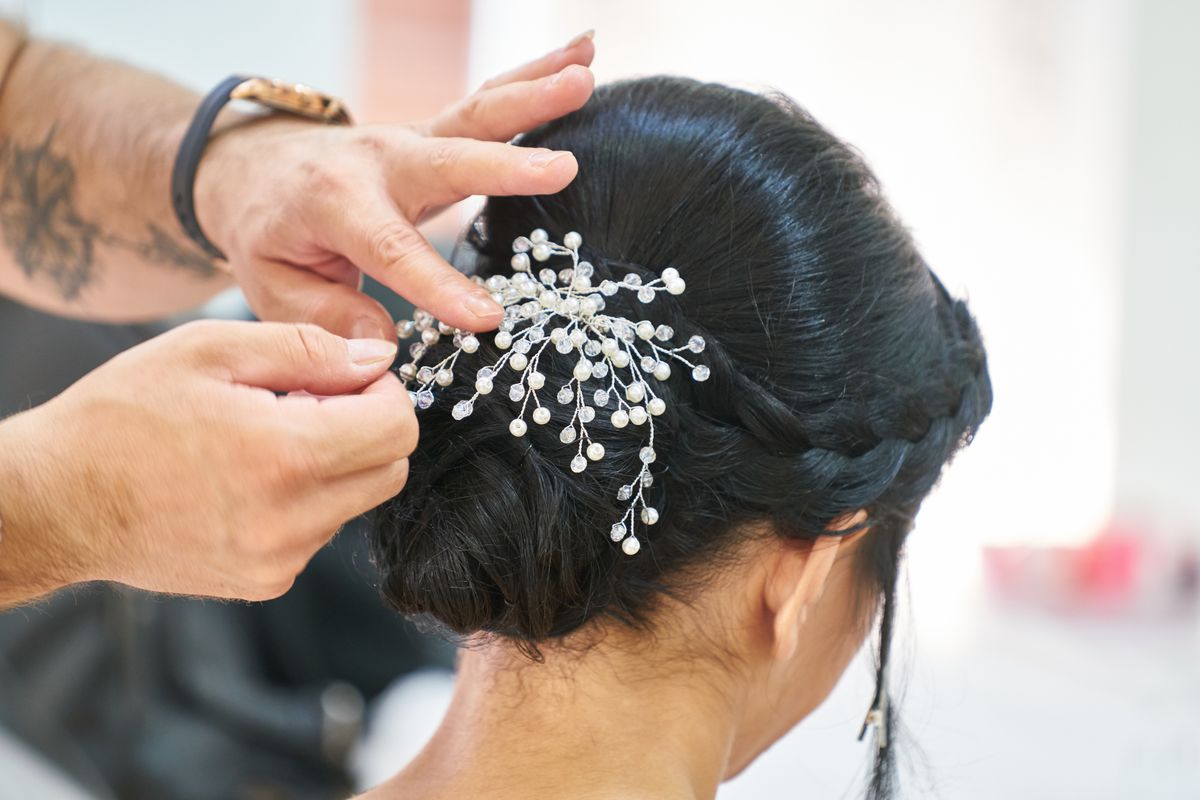
Photo: Pexels · License. Illustrative stock photography; pictured people, products and settings are not claimed to demonstrate this exact guide or endorse this publication.
Bring the real attachment
A veil comb, separate pins and other attachments behave differently. A photograph cannot show every practical detail of the piece. Compare a tested attachment and removal plan with a front-view style without practical veil checks.
Clarify the wear schedule
Decide whether the veil stays for the ceremony, photographs or the reception. Its removal must not require dismantling the whole style unexpectedly. Bring the actual veil, accessories and outfit neckline information.
Discuss the support point
Ask the stylist where the attachment will sit and how it works with your current hair. Do not assume every reference uses the same base. Use a visible checkpoint: the veil is supported comfortably and its planned removal sequence is understood
Check the complete outfit context
Include neckline, earrings and any hair accessory worn with the veil. A combination may feel different when all pieces are present. Priority: the veil wear and removal schedule.
Use a removal example
If the veil comes off before dinner, a clear supported removal sequence can preserve the intended shape without guessing which pin belongs to what. Consider this specific example: the veil comes off before dinner, so the stylist identifies which fastening is removed without disturbing the rest of the hairstyle.
Troubleshoot weight and pulling
Tell the stylist directly if the piece feels heavy or tight. Adjust the plan rather than accepting pain as normal event preparation. If the attachment feels heavy or pulls, first check attachment weight, placement and which fastening supports which piece. Then tell the stylist and adjust support or placement during the trial.
Record views and timing
Take front, side and back photographs and note how long the appointment stages took. Images alone do not record the practical sequence. The practical tradeoff is a dramatic veil may need a more carefully planned support point.
Leave with a simple brief
Write the preparation instructions, accessory list and who will help remove the veil. Keep the plan understandable to the actual helper. Before finishing, make sure the actual helper understands the agreed sequence Record the one detail that would be useful next time: the attachment position and removal instructions.
Record the support and removal points separately
Ask the stylist to show which fastening holds the veil and which pieces support the hairstyle itself. Photograph the attachment area if practical and label the notes clearly. The decorative comb you can see may not be the only structural part. Explain when the veil comes off and whether the hairstyle should remain intact afterward. If another headpiece stays for the reception, try the full combination rather than evaluating each ornament separately. Check the neckline and earrings as well as the front photograph.
During the trial, move your head, look down and sit with the actual piece in place. Report pulling or pressure immediately so support and placement can be reconsidered. Ask the person who will help later to observe the specific removal sequence, or record instructions they can understand. Do not rely on removing the biggest visible pin first. Take front, side and back views after the trial and note the appointment stages, preparation and any area that needs a change. If a different veil is chosen later, tell the stylist its attachment and weight may differ. Keep the final agreed plan in one place with the accessory list. The trial is most useful when it tests the actual wear-and-removal sequence, rather than producing a single photograph that hides the practical support choices.
Your working checklist
Checkmarks stay in this browser when storage is available. They do not submit information or complete a purchase.
Put it into practice
- Bring the veil and other planned accessories.
- Explain when the veil comes off.
- Discuss the attachment and support point.
- Try the neckline and earrings context.
- Rehearse the supported removal sequence.
- Record views, preparation and helper instructions.
Before you finish
- The real attachment was assessed.
- Removal timing is known.
- Support feels comfortable.
- The helper has clear instructions.
Common questions
Is a veil photograph enough for the trial?
It can start discussion, but the actual piece is more informative because attachment and weight matter. Ask the stylist what they need.
Who should remove the veil later?
Choose a helper who has been shown the specific sequence, or arrange professional help if needed. Do not assume any visible pin can be pulled first.
Does the style need to be tighter for the veil?
Support should be planned appropriately, but discomfort is feedback to adjust. More pulling is not the automatic answer.
What if I change the veil after the trial?
Tell the stylist because the attachment, weight and shape may change the plan. Do not assume a different piece behaves identically.