Plan Event Hair for Humidity and Outdoor Photographs
Outdoor event hair should have a workable shape even if the finish changes. Plan the outline, accessories and any professional preparation around the actual setting. No style or product can promise identical results through every weather condition.
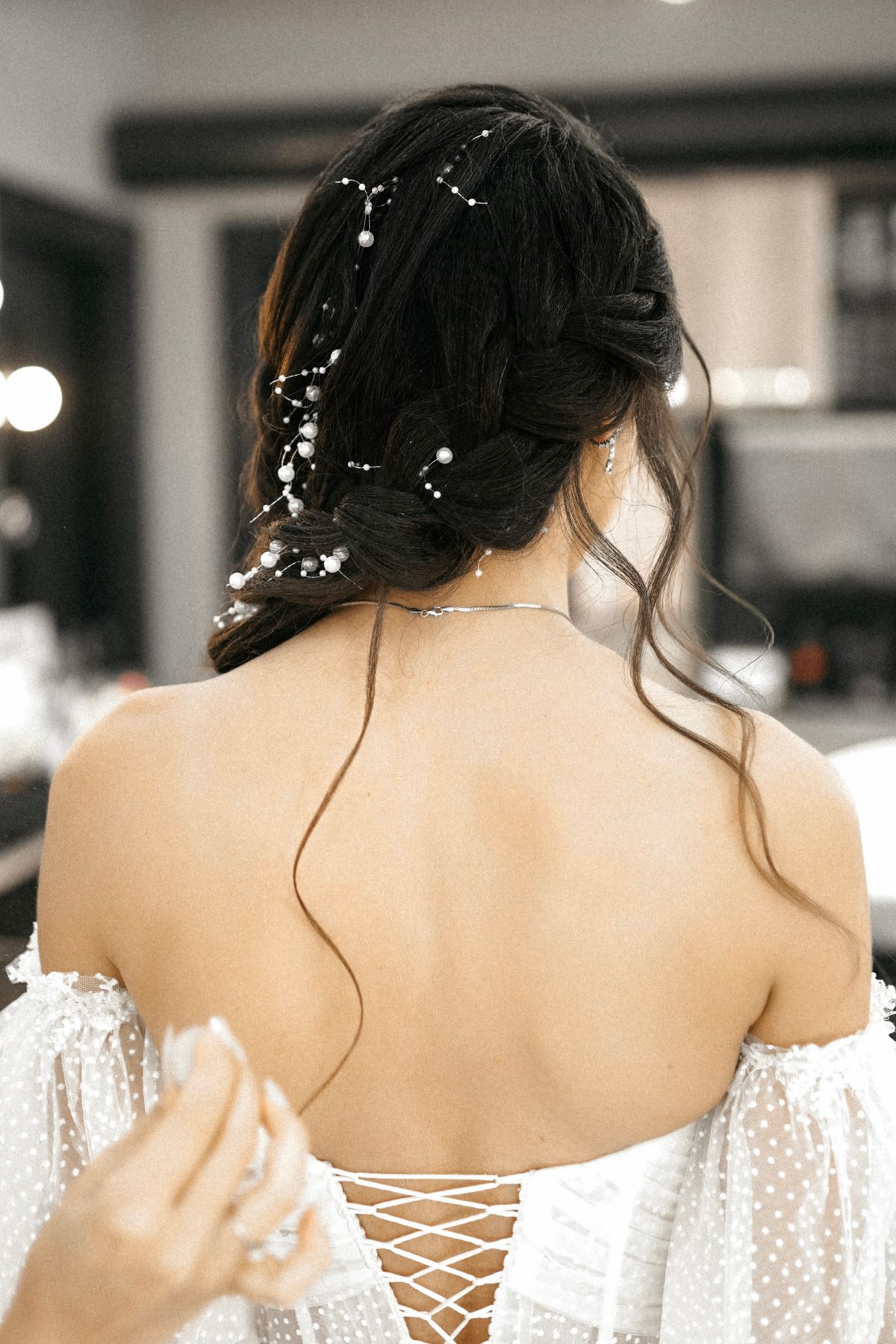
Photo: Pexels · License. Illustrative stock photography; pictured people, products and settings are not claimed to demonstrate this exact guide or endorse this publication.
Use current event information
Check how long you will be outdoors and whether there is sheltered space. A brief photo session differs from an entire outdoor reception. Compare an adaptable familiar outline with a rigid finish depending on perfect conditions.
Choose an adaptable outline
A style that remains recognizable with a softer finish may be easier to manage than one depending on every strand staying rigidly identical. Keep the event exposure information and actual accessory beside the reference photographs.
Work with familiar texture preparation
Use tested ordinary routines or specific stylist guidance. Avoid adding several unfamiliar anti-humidity products on the event day. Use a visible checkpoint: the style remains usable with a softer finish and has one manageable fallback
Plan accessories for comfort
A light supported detail can provide a clear outline without forcing an uncomfortable base. Check the actual piece before the event. Priority: the real outdoor duration.
Use an outdoor-photo example
A side-cleared natural-texture shape can remain intentional even when the loose lengths become softer. The outline carries the design. Consider this specific example: a side-cleared shape still reads deliberately when the loose lengths soften, so the wearer does not need to recreate every trial-day detail.
Troubleshoot changes selectively
If one section shifts, decide whether it affects the whole outline. Avoid rebuilding every part solely because the finish differs from the trial photograph. If one section changes after outdoor exposure, first check whether the changed section affects the actual outline. Then assess the overall outline before rebuilding unrelated areas.
Carry a small realistic kit
Choose only items you understand and can use in a suitable place. A large repair collection does not guarantee weather resistance. The practical tradeoff is a softer adaptable style may offer less rigid precision but fewer repair demands.
Record the useful contingency
Write the simple adjustment you would make if the outline changes. A clear fallback is more practical than a promised weatherproof finish. Before finishing, choose one simple fallback and avoid a large unfamiliar repair kit Record the one detail that would be useful next time: the exposure and useful fallback adjustment.
Choose a fallback that preserves the main outline
Write how long the style will actually be outdoors, whether shelter is available and which stages need the clearest photographic shape. Compare the trial outline with a softer version rather than assuming the exact finish must remain unchanged. A side-cleared natural-texture arrangement may still suit the outfit when loose lengths soften. Identify the feature that makes the style recognizable, such as the part or one visible accessory, and keep that as the priority.
Choose a fallback you already know how to perform in a suitable setting. It might involve repositioning a light accessory or accepting a softer loose outline, rather than rebuilding a complex updo. Pack only the familiar supplies needed for that action. Follow product instructions instead of stacking unfamiliar weather claims from several formulas. If a stylist is involved, tell them the actual exposure and ask how the construction can be adjusted comfortably. Check the forecast close to the date, but do not interpret a product or trial photograph as a guarantee against every condition. After the event, record what changed and whether it affected the outline or only the surface finish. That distinction is useful for the next plan and avoids treating an acceptable softer result as a failure requiring more rigid or uncomfortable support. Tell any helper which adjustment is the fallback and which parts should be left alone. This avoids a well-intended full restyle when the agreed plan was only to move one accessory.
Your working checklist
Checkmarks stay in this browser when storage is available. They do not submit information or complete a purchase.
Put it into practice
- Confirm outdoor duration and sheltered options.
- Choose an adaptable outline.
- Use familiar preparation or stylist instructions.
- Test the actual accessory.
- Choose one simple fallback adjustment.
- Pack a small familiar kit.
Before you finish
- No weather guarantee is assumed.
- The outline is adaptable.
- Accessories were tested.
- The fallback is familiar and manageable.
Common questions
Can a hairstyle be guaranteed humidity-proof?
No practical guide can promise the same finish in every condition. Plan a shape and fallback you can manage.
Should I use every anti-frizz product together?
No. Follow the chosen products directions and your familiar routine rather than stacking unfamiliar formulas.
What if the curls soften during photographs?
Decide whether the overall outline still works. A softer finish can remain intentional and does not automatically require a full reset.
Should I change the style if the forecast changes?
Consider the actual exposure and your available options. Discuss major changes with the stylist rather than making an unfamiliar complicated plan at the last minute.