Prepare for an Event-Hair Consultation: Photos, Timing and Useful Questions
An event-hair consultation should establish a practical plan before the appointment day. Bring the outfit context, current hair information and a realistic schedule. The aim is to agree on the shape, preparation and accessories rather than assuming the stylist can infer every preference from one image.
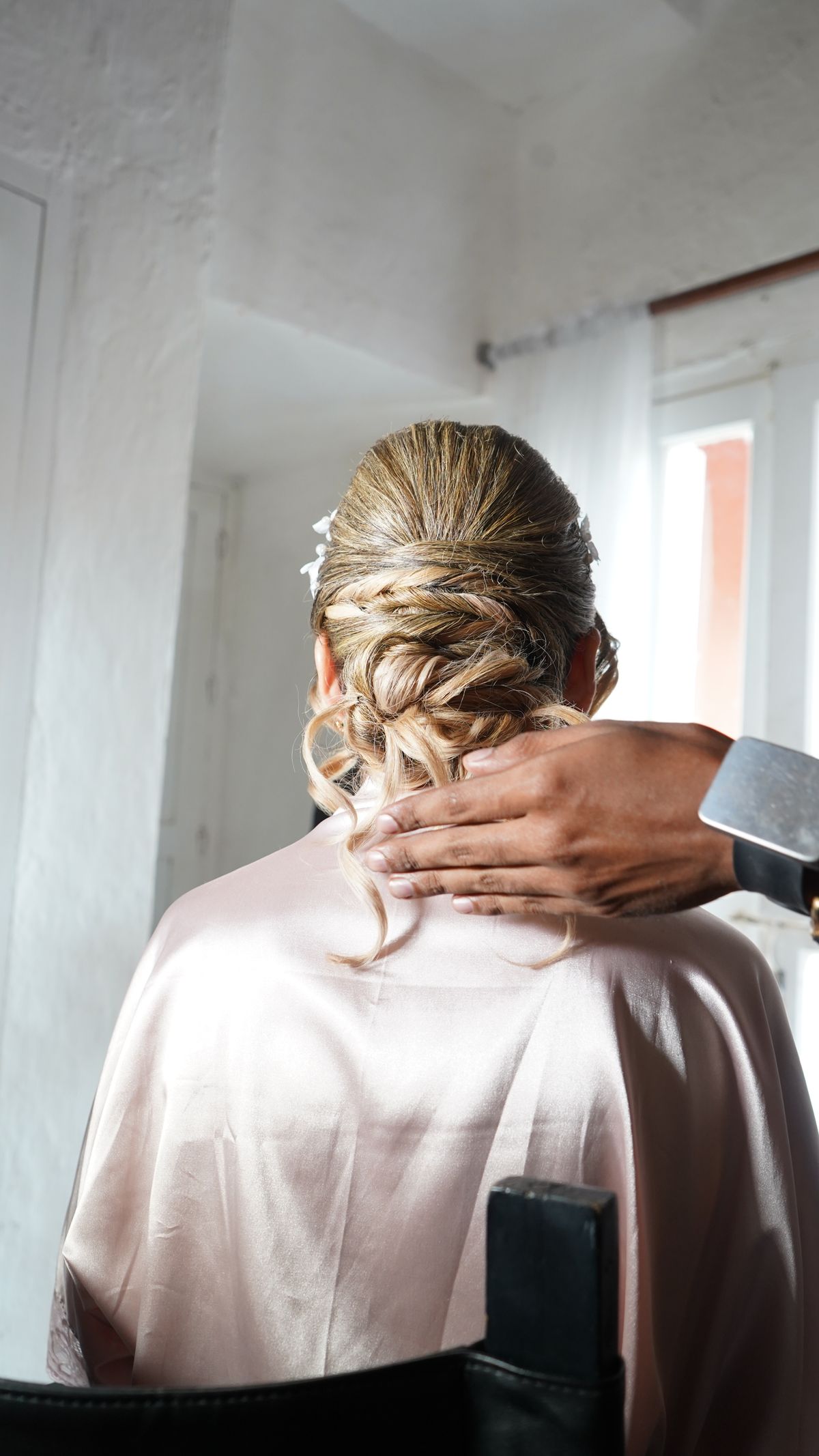
Photo: Pexels · License. Illustrative stock photography; pictured people, products and settings are not claimed to demonstrate this exact guide or endorse this publication.
Describe the full event schedule
Include travel, dressing, ceremony time and any need to remove accessories later. The hair appointment must fit that sequence. Compare a written practical brief with an unlabeled inspiration photograph alone.
Bring current hair information
Show current length and texture and explain usual preparation. Mention recent changes relevant to styling without expecting a reference photograph to reveal them. Keep schedule, outfit images and actual accessories together for the consultation.
Choose clear reference features
Identify the outline, face clearance and texture you like. Include comparable-length images where possible. Use a visible checkpoint: preparation, shape, accessories and timing are understood before the appointment day
Bring the actual accessory
A comb, clip or headpiece has weight and attachment details that a product picture may not show. Priority: the real event sequence and your current hair.
Use an outfit example
A high neckline and statement earrings may make side clearance more useful than a fully loose shape. Discuss that relationship explicitly. Consider this specific example: a high collar and large earrings make side clearance important, so the hairstyle brief includes that instead of focusing only on the front photograph.
Clarify preparation instructions
Ask whether the appointment requires a particular starting condition and follow the stylist own advice. Do not assume everyone should arrive with identical wash timing. If the preparation advice remains vague, first check which part of the service or starting condition is unresolved. Then ask the stylist for the specific starting condition needed for your planned service.
Ask about practical comfort
Discuss support, pin placement and how the style should feel. AAD notes that painful tight styling should be changed; comfort belongs in the plan. The practical tradeoff is a more elaborate style may need more appointment time and support.
Write the agreed plan
Record appointment timing, preparation, accessories and take-down information. Clear notes reduce event-day uncertainty. Before finishing, write the timing, preparation and accessory plan in one place Record the one detail that would be useful next time: the exact preparation instructions and agreed outline.
Turn the appointment into a short written brief
Bring the event sequence, current-hair photographs, neckline and actual accessories. State which part of the reference matters most: visible curls, a clear side, a soft outline or another concrete feature. Mention how you normally prepare your hair and ask what starting condition this particular service needs. If the answer is vague, clarify the action rather than guessing a universal wash timing. Ask how much appointment time the planned construction needs and whether travel or dressing could disturb it before the event begins.
Discuss comfort using locations and sensations rather than simply saying you dislike tight hair. Explain, for example, that you do not want pulling at the temples or a hard piece pressing at the nape. Try the actual earrings and accessory placement if the consultation format allows. Ask which items the stylist supplies and which you must bring. Record the preparation instructions, appointment time, accessory list and take-down guidance together. If the plan changes later, update the brief rather than adding a new reference without explanation. A high neckline, heavier comb or changed outdoor schedule can affect the practical choices. The useful outcome is a shared plan someone can follow on the day, not only a collection of attractive pictures or an assumption that every event style starts with the same preparation. Include the contact method for any later accessory or schedule change in the notes. A new headpiece or different appointment location should reach the stylist as a clear update, rather than appearing unexpectedly on the event day.
Your working checklist
Checkmarks stay in this browser when storage is available. They do not submit information or complete a purchase.
Put it into practice
- Write the full event schedule.
- Bring current-hair and outfit references.
- Label the features you like.
- Bring the real accessory if available.
- Ask for specific preparation and comfort guidance.
- Record the agreed plan and timing.
Before you finish
- Timing is realistic.
- The reference features are labeled.
- Preparation instructions are specific.
- Comfort and removal were discussed.
Common questions
Should I arrive with freshly washed hair?
Ask the stylist for the preparation needed for your texture and planned service. There is no universal timing suitable for every appointment.
Do I need the actual dress?
A neckline photograph may be enough for discussion, but follow the salon practical guidance. The relevant shape and coverage should be clear.
What if the reference uses extensions?
Ask whether the desired outline is possible with your current hair and what alternatives exist. Extensions are a separate choice, not an automatic requirement.
How do I describe comfort concerns?
Use direct details such as avoiding pulling at the temples or a heavy piece at the crown. Ask how the plan can be adjusted.